Sales
Turn a pipeline that lives in spreadsheets and group chats into a forecastable, auditable revenue process.
What we build
- Lead-to-opportunity processQualification criteria, stage gates and business process flows your sales managers agreed to, not generic defaults.
- Quoting and pricing controlProduct catalogue, price lists by segment or region, discount approval matrices, and branded quote documents generated from the record.
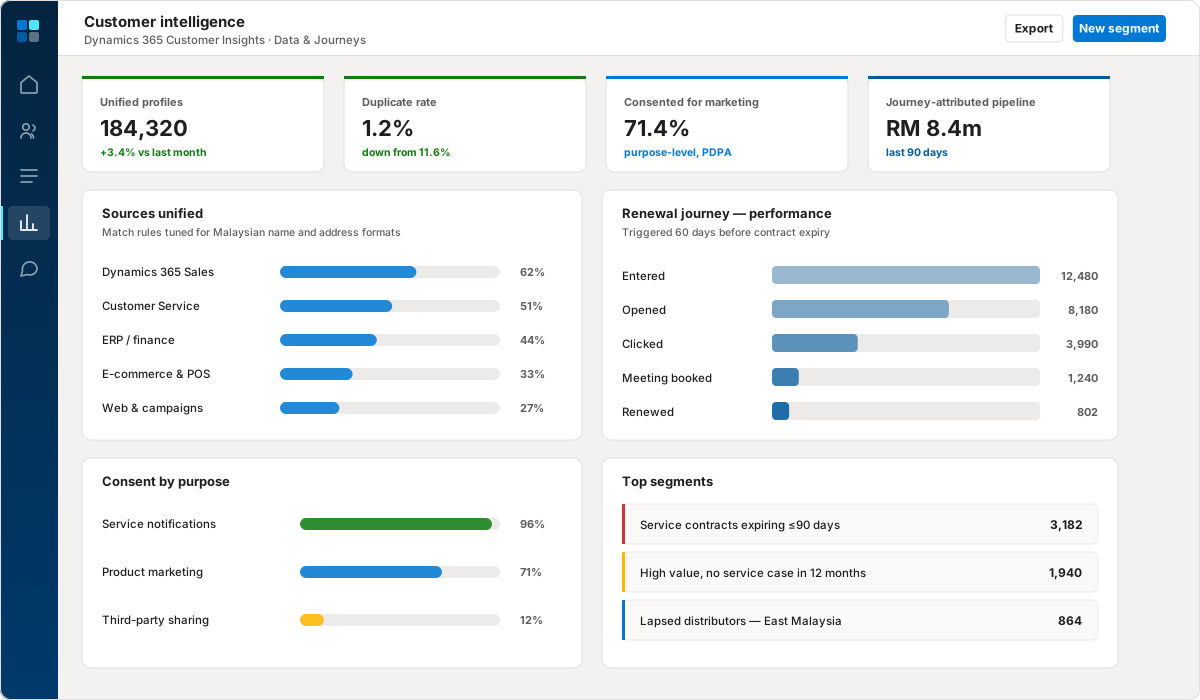
- Account and contact governanceDuplicate detection, parent–child account hierarchies for group customers, and territory-based security so branches see what they should.
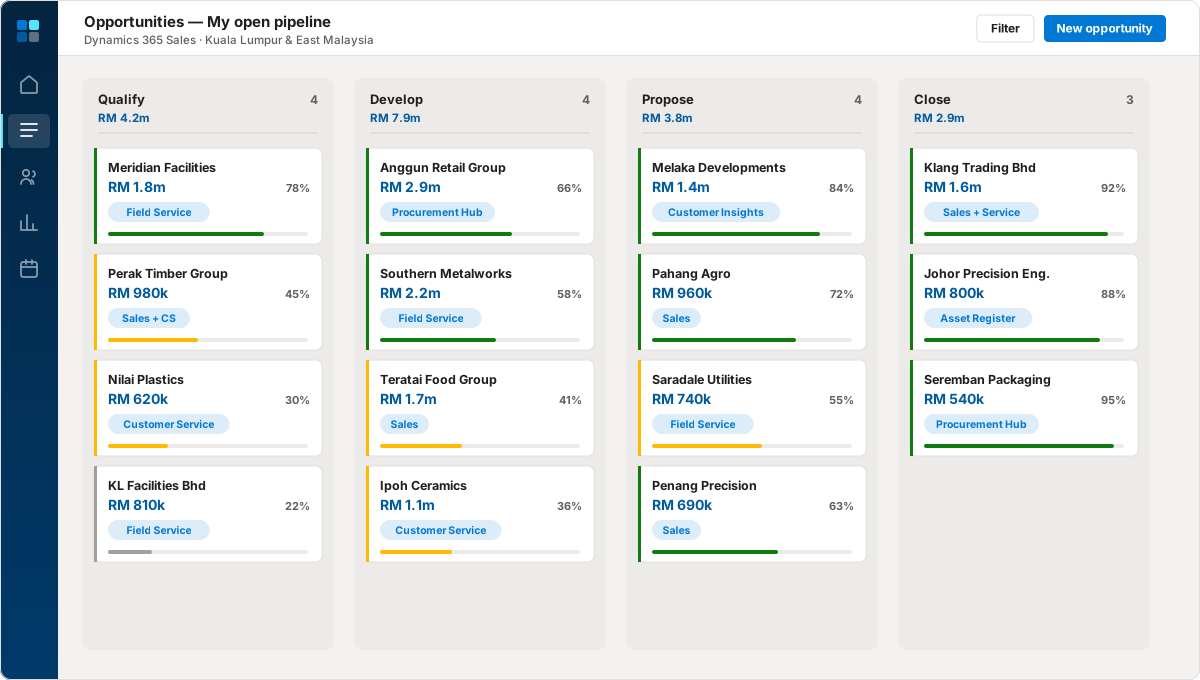
- Forecasting and pipeline reportingRollup forecasts by hierarchy, weighted pipeline, win/loss reason capture, and Power BI dashboards leadership will actually open.
- Handoff to ERP and billingA controlled order-to-invoice interface into Business Central, SAP, Oracle, AutoCount or your existing finance stack.
Why it matters here
Malaysian mid-market revenue is relationship-led and branch-distributed. The real pipeline lives in individual salespeople's phones, notebooks and personal spreadsheets — which means the company does not actually own its own customer relationships. When someone resigns, a portion of next year's revenue resigns with them.
The second problem is structural. A single Malaysian group customer routinely appears as twelve separate records, one per subsidiary and one per branch that ever quoted them, so nobody can see total exposure, total spend, or that two branches are quoting the same buyer against each other. Account hierarchies, duplicate detection and territory-based security fix that permanently — and they have to be designed in, not cleaned up afterwards.
Typical engagement
8–14 weeks for a first production rollout covering one business unit, including data migration from spreadsheets or a legacy CRM, and role-based training. Phased rollouts to additional entities follow at roughly three to four weeks each.